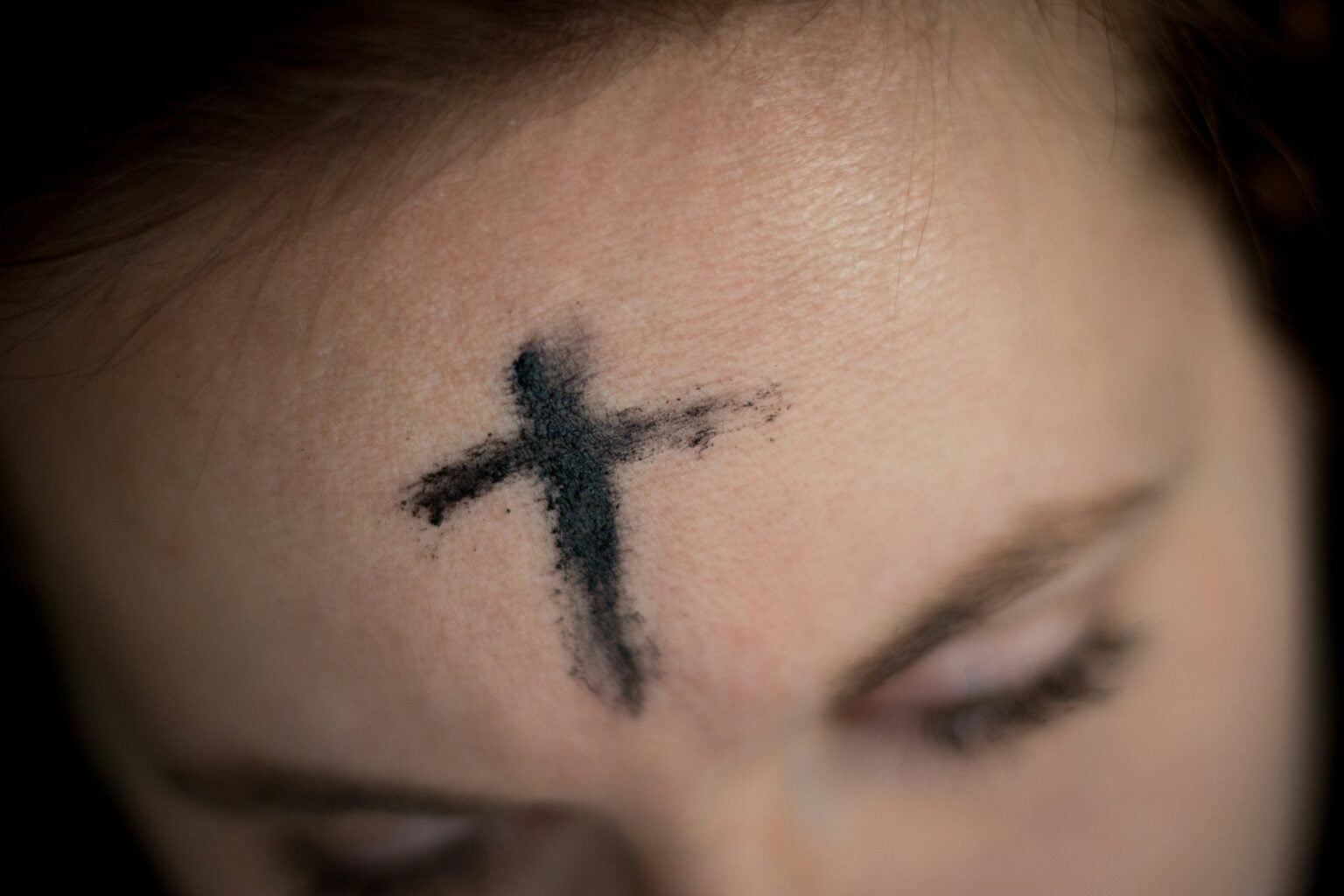
Another Ash Wednesday will soon be upon us. Ash and ashes are gritty, rich and evocative symbols that remind us of fire and our mortality. I have to confess that they usually also remind me of a rather naughty statement I came across once.

I can’t remember who wrote it — one of the big names in Christian literature, such as C.S. Lewis or Dallas Willard, come to mind, or maybe Peter Kreeft — “Hell,” whoever it was wrote, “is where you make an eternal ash of yourself!” Something to be avoided, methinks.
So, as some other wit said, when our churches are doing their job, they will, hopefully, make it hard to go there. Ash Wednesday and Lent, with all the exhortations to observe a Holy one, are a useful part of that effort.
On page 30 of our Book of Common Prayer (BCP) you will find a very useful devotional tool for an Holy Lent observation and for keeping our bearings with regard to our eternal destination: THE LITANY, which is five pages of prayerful goodness.
If ever there was a prayer that covers all the bases, that prays up one side and down the other of the Christian life, it is THE LITANY, “Which may be sung or said before the Holy Communion;” according to the BCP rubrics, “or after the Creed at Morning or Evening Prayer, instead of the remaining part of the Service; or as a separate service, with Hymns, a Psalm, a Lesson, the Creed, and a Sermon, at the discretion of the Minister.”
I’m sad to say, other than using it (there is a Book of Alternative Services version, too—p138) as the Intercessions or Prayers of the People on the First Sundays of Lent and Advent on a few occasions, I’ve never experienced or used THE LITANY in that way, or as the rubrics also require, “The Litany should always be used at least once a month on a Sunday, and is commended for use on Wednesdays, Fridays, and Rogation Days.”
For now, I’d like to suggest praying THE LITANY as a regular (even daily) Lenten Devotional Discipline. Here are two reasons why it would be worth the effort.
SANCTIFIER OF THE FAITHFUL
As usual, I’m pointing out the presence and work of the Holy Spirit in these resources. The first reference to the Holy Ghost in THE LITANY comes in the opening repetitive and thoroughly Trinitarian invocation of Divine Mercy upon us all.
O God the Holy Ghost, Sanctifier of the faithful: have mercy upon us.
Indeed! It is the Holy Spirit, the promised Helper, Comforter, Advocate and Guide who sanctifies — sets apart, makes holy — and is an agent of God’s great mercy. How does He sanctify us? He teaches us all things and brings to our remembrance all that Jesus said (John 14.26). The more we learn and remember, the holier we can be.
We do need to engage, however. Some people can do it extemporaneously. They are able to worship, read Scripture daily and to pray, Holy Spirit-led, in such a way as to cover all the necessary bases and without focusing too much on their own concerns and biases.
I’m not one of them. I need some form of Prayer Book and lectionary framework to take me out of myself and into the vast and divine reaches of the sanctification that only comes from the barely apprehensible mystery who is the Triune God.
Using that framework, the Holy Spirit exposes me to all of Scripture, not just the pieces I enjoy, and He teaches me and brings Jesus to my remembrance throughout because there is the reading from one of the gospels every single day. I know how easy it would be for me to miss Him if I were to run down the bunny trails of my own self absorption.
GOOD LORD, DELIVER US
And then, having invoked the glorious Trinity, we pray that God will not remember our sins, nor those of our ancestors, and that we will be spared their toxic after-effects. It would be easy to slide on by the reference to our forefathers (and mothers) as being a mere antiquated formality. But it is one of the many brilliant details to be found in Prayer Book prayer and very much worth a devotional pause.
Almost all of us labour to some extent under the toxic effects of the sin of our families of origin — generational sin, some call it — such as idolatry, sexual sin, rebellion, addictions, broken relationships. I know I do. And I know that I, unwittingly, have passed that toxicity on to my children.
THE LITANY reminds me to pray for The LORD, in his mercy, to defuse any sinful effects coming down through my family which entangle me and that I may be passing on to my children—thus enabling the Holy Spirit’s sanctifying and life-giving work—and helping us all to avoid making eternal ashes of ourselves!