
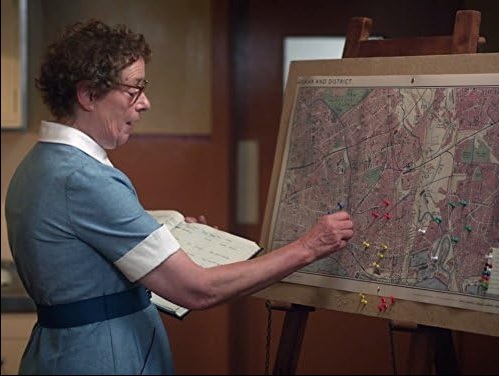
I felt the greatest sympathy for Nurse Phyllis Crane in the BBC series Call the Midwife when she was summoned by the local board of health to justify why she was still actively involved in her profession as a midwife well past her retirement age.
Yes, I’m several seasons behind in watching, but I savour my favourite TV show one episode at a time. Nurse Crane sees her work as a life-long vocation, not unlike those of us who have been called to ordained ministry. Having turned 70 recently, the concept of retirement is a frequent subject of conversation in my circles.
How is retirement? Are you settling into retirement? What’s it like to be retired? I’m never quite sure how to answer, because that term conceals a world of assumptions in the questioner, some of which might match my understanding and experience, and others not at all. The mandatory retirement age of 65 was legally abolished in Canada only in November 2025.
However, our culture still assumes that entering a certain age bracket makes one halt all professional activity with glee.
It might feel that way mostly if one has accumulated so much professional failure and burnout, hurt and grief that retirement looks like a veritable final pass out of jail. In contrast, retiring from a professional life that has been a source of joy and accomplishment can feel like a very mixed blessing that can include a certain amount of sadness and grief over its ending.
Besides, spending one’s days on the golf course or on yet another trip on one’s bucket list is only reserved for a privileged few and clearly out of reach for the masses.
The retiring process for clergy is precisely such a mixed blessing, presenting both challenges and opportunities. The challenges seem easily acknowledged: reduced energy, aches and pains in the body, waning interest, and mental and physical fatigue.
The opportunities do not often seem to be sufficiently appreciated; to continue serving in a ministerial capacity with the freedom to make adjustments when health issues and stamina begin to encroach on one’s zeal to remain in the ministerial saddle.
Retirement comes in different forms and expressions, depending on the life circumstances of the priest. If health and family matters are reasonably stable, there is no reason a priest needs to halt all ministry when the employment paycheque no longer arrives. For sure, a realistic view of commitments is essential, as is the awareness of engaging more intentionally in health-affirming lifestyle choices.
In my case, I have become quite committed to daily exercise in the form of walking and swimming. Not only do I now have the freedom and time to dedicate to this, but my body requires the physical discipline of exercise lest I become overly dependent on medical care before my time.
Given my reasonable health, I derive great joy and satisfaction from the ways I can continue to serve the diocese and the church at large. So, when asked “how is retirement,” I reply that the best part of retirement is the freedom to choose ongoing ministry tailored to my life circumstances, health and personal stamina.
I am grateful for a bishop who can appreciate this and for colleagues who are happy to call on me to provide Sunday ministry when needed.
Sadly, not everyone freely chooses and appreciates retirement. Financial insecurity, health problems and family instability can all impinge on “enjoying” retirement.
Ministry burnout is an especially dark cloud that can force retirement before its time. I ache for colleagues whose burnout has led to a total abandonment, not only of ministry opportunities, but also to an abrupt ending of collegial friendships and social interactions.
Healing of such crushing experiences does not come easily — I pray for healing in vocational broken hearts and for the recovery of a sense of joy and a life-giving connection to the church.
The Anglican tradition has a practice of bestowing on retired clergy the title of honorary assistant. This is not a hollow title or a way to park a senior cleric in the pews.
The term conveys a certain acknowledgement and respect toward those whom God had set apart to lead His holy people in worship and guide them in discipleship. While the employment may cease, most often the vocation does not.
Some clerics are perfectly content to take their place in the pews, but others yearn for ongoing expression and appreciation of their priestly calling as the limitations of age and the levels of interest/desire permit. To those in active ministry, I would like to say: pay special attention to the retired priest moving into your parish. We need both your pastoral attention and your collegial company.
Don’t assume that you know our needs, or what we should or should not be doing. Retirement holds different blessings for different clergy, so listen, pay attention and make space for the priestly ministry they can bring.