PRINCE ALBERT — Matthew Hoskin graduated from Thunder Bay high school and went to the University of Ottawa, where he met Jennie. They moved to Toronto, where he received his master’s at the University of Toronto.
They then moved to Edinburgh, Scotland, where Matthew got his master’s in theology in history and his Ph.D in Church History.
Then it was on to Rome for a year at the British school. He spent a lot of time in the Vatican library as a Latin scholar. They then went back to Scotland, where he taught at the University of Edinburgh. After that, he worked with a special team doing work at the University of Durham in England, and then they travelled back to Canada to Vancouver and finally Thunder Bay to work.
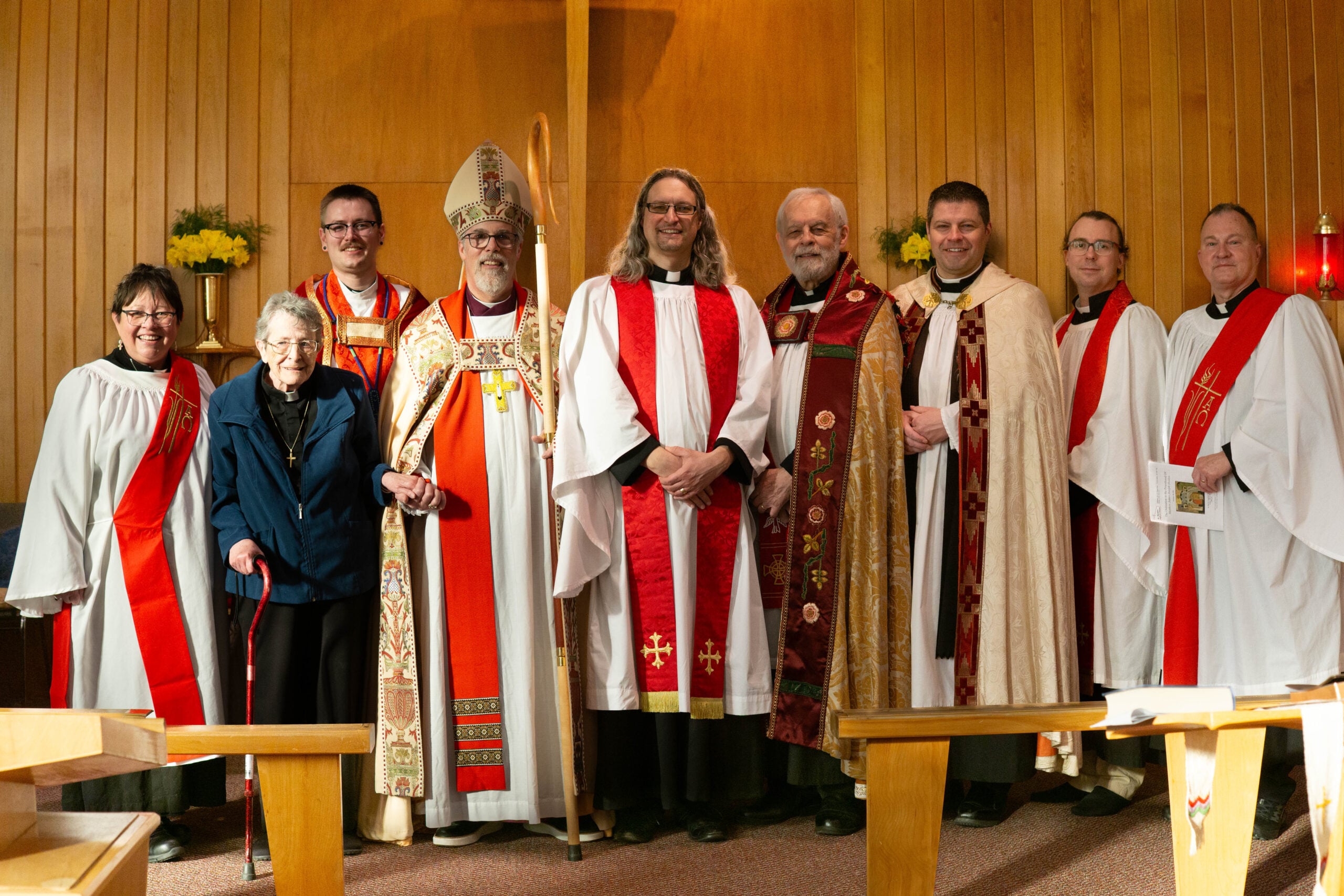
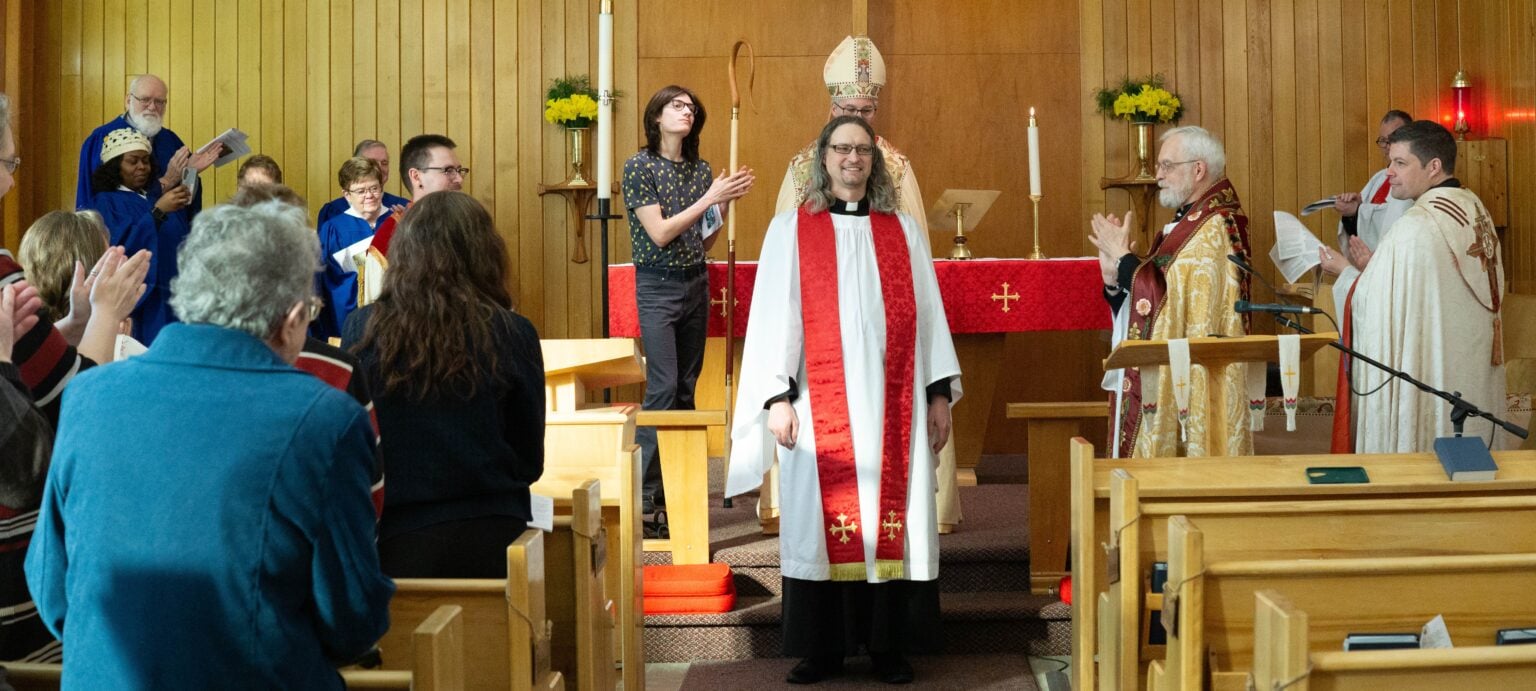
You could say God finally caught up to him in Thunder Bay, where Hoskin perceived a calling to the ministry and Saskatchewan. When Hoskin got to Saskatchewan in September, he was ordained as a deacon in October, and on Feb. 28, he was ordained to the priesthood in St. David’s Church.
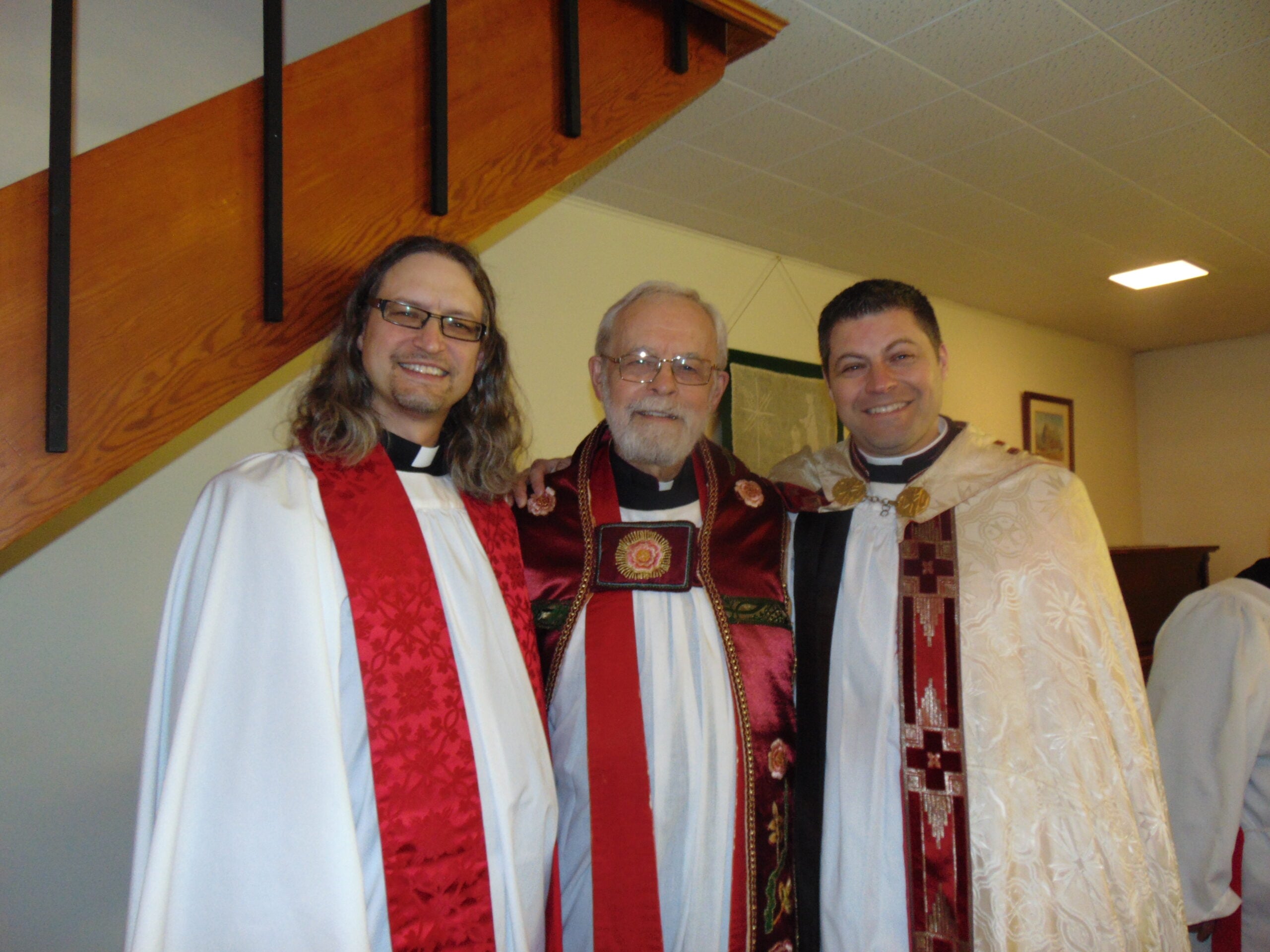
All his family came to the ordination, including his older sister from Langman, his brother from Calgary and his older brother, Archdeacon Jonathon Hoskin, from the Diocese of Brandon, who preached the sermon.
The archdeacon began his sermon by admitting that he had never preached at an ordination and that the task is multi-faceted: a lesson on the nature of the Anglican priesthood and a lesson on the theological bases undergirding professional Christian ministry. He opted to speak on the pragmatic reality of ordained ministry, realizing he knew better than to try to lecture his younger brother on theological matters!
Referring to the epistle reading from St. Paul’s letter to the Ephesians, Hoskin said that the institution of captivity itself has been taken under Christ Jesus’ control. It is now His captive — so that His people can be free from the realities of having been captives of Satan, temptation, sin, and death.
Our realities apart from Christ are the captivities to self-love, pride and ego; to dependence on other creatures, even bearers of God’s image, rather than to the Creator; to determinism, in all of its many forms.
As we know freedom from captivity, we begin to realize the depths and wonders of Christ’s gifts to us: some have been divinely appointed to be apostles, some to be prophets, some evangelists, pastors, teachers … , the archdeacon said.
These are God-ordained gifts that cannot be actualized in our lives while we remain in captivity — but if the Son has set us free, then we are free indeed: free to fulfill God’s purpose, which is not for our own sake, but for the sake of the community – the building up of all of us to be mature disciples.
Jesus’ image of Himself as the good shepherd is the other picture for us to consider today. Now, it is not the case that the parish priest is the hired hand, who runs away when the wolf comes (according to Jesus’ picture). The old comparison of the clerical role against the laity was that the clergy are paid to be good, while the rest of the Christians are good for nothing.
The priest is not a hired hand under Jesus, but is invited to share Jesus’ work among this community. In their family, Matthew was the golden child; the other brothers got hand-me-downs of their sisters that were not that great!
The archdeacon went on to say to the congregation now Matthew is yours and you are his. The ordained minister is a catalyst for the growth of the congregation in Christlikeness, embodying the care of Christ for the community toward maturity. The Anglican priest is charged with bridging the span between the sacred and the secular — not to prevent the intermingling of the two, but to dissolve the false divisions between the sacred and the ordinary.
In closing, the archdeacon stressed that the most important thing is to pray, to guard Matthew’s time for prayer, for he cannot do this alone. He needs to pray to be in close contact with the One who has his strength. Make sure he gets to pray and pray for him.