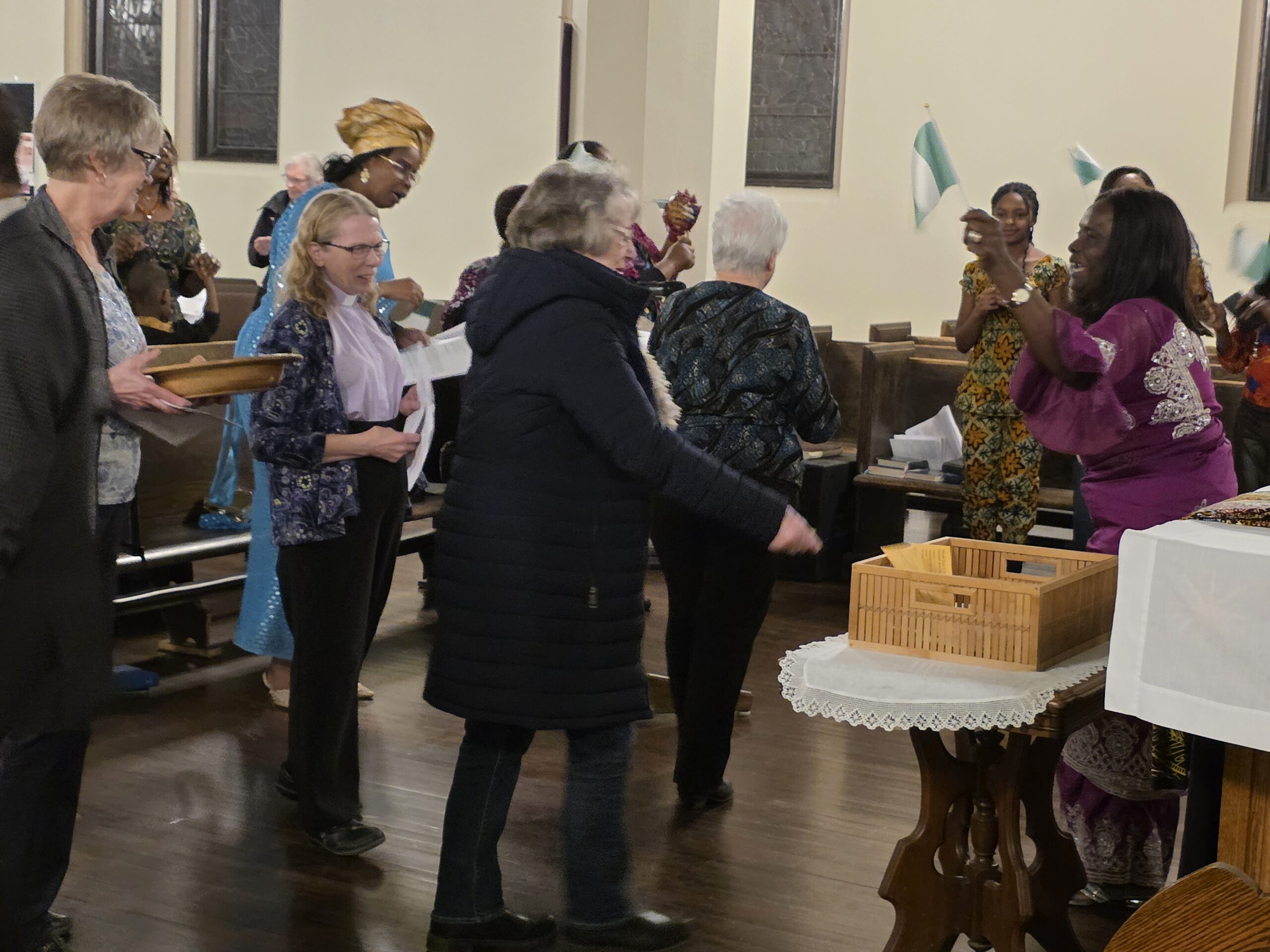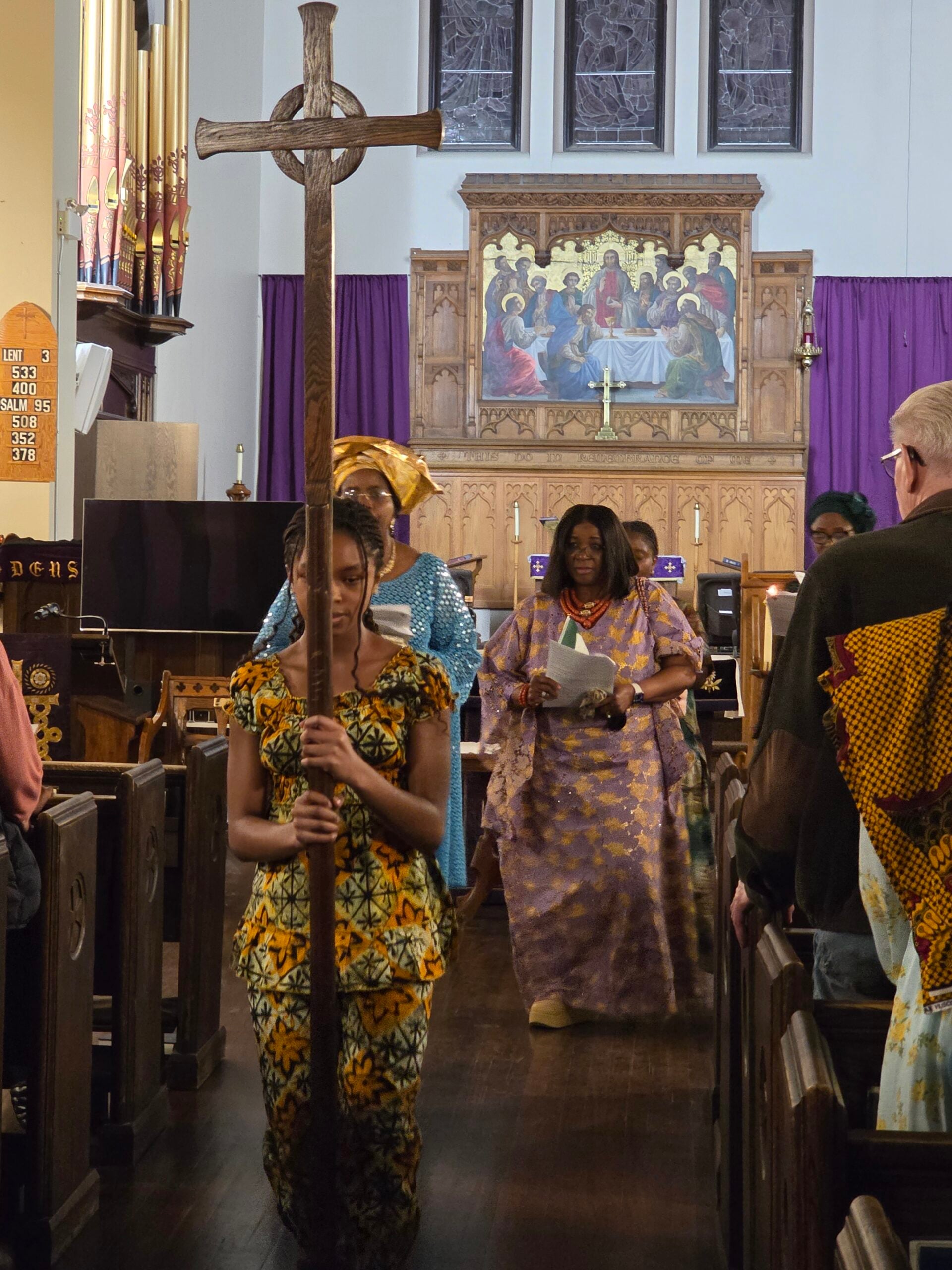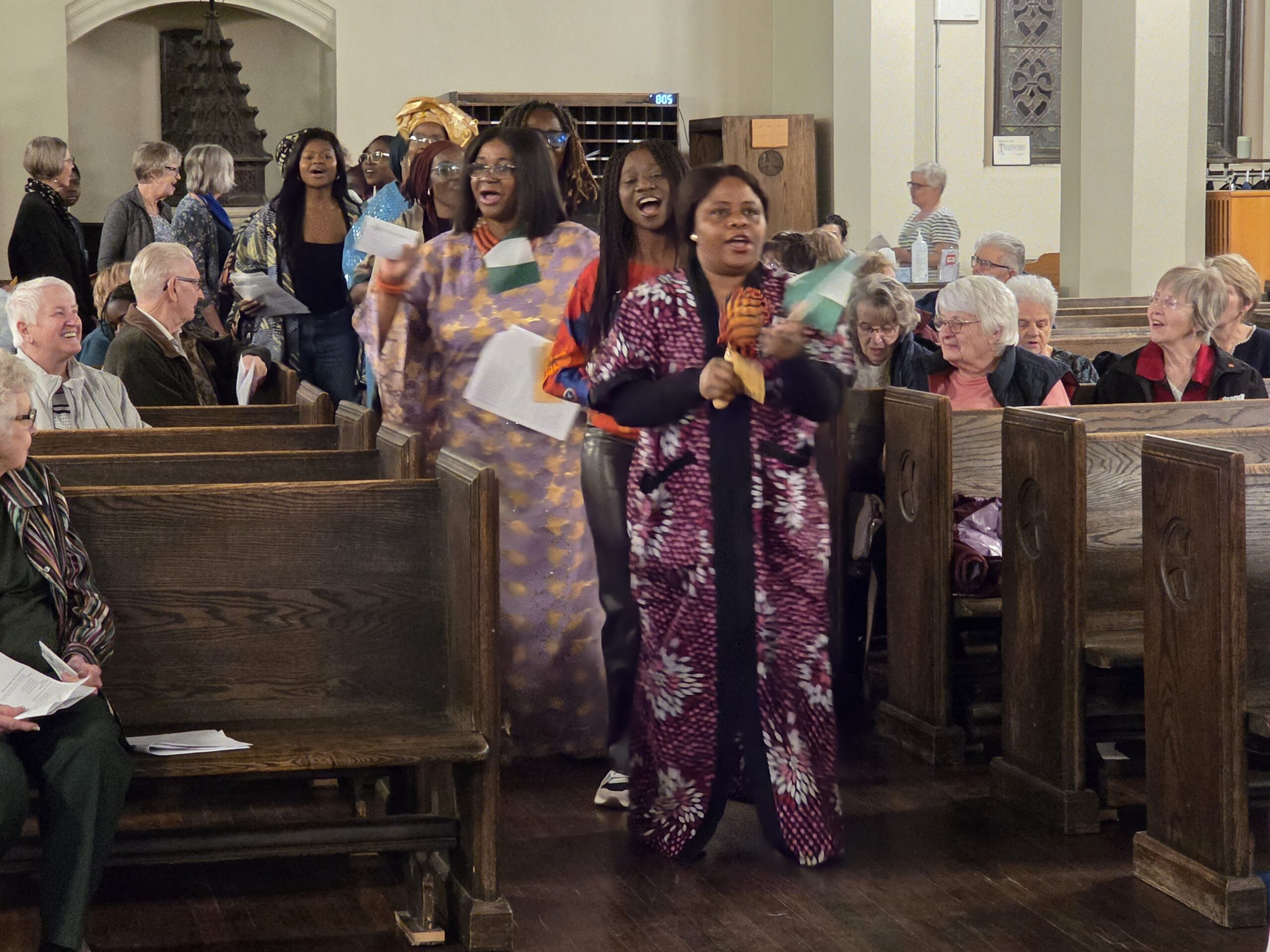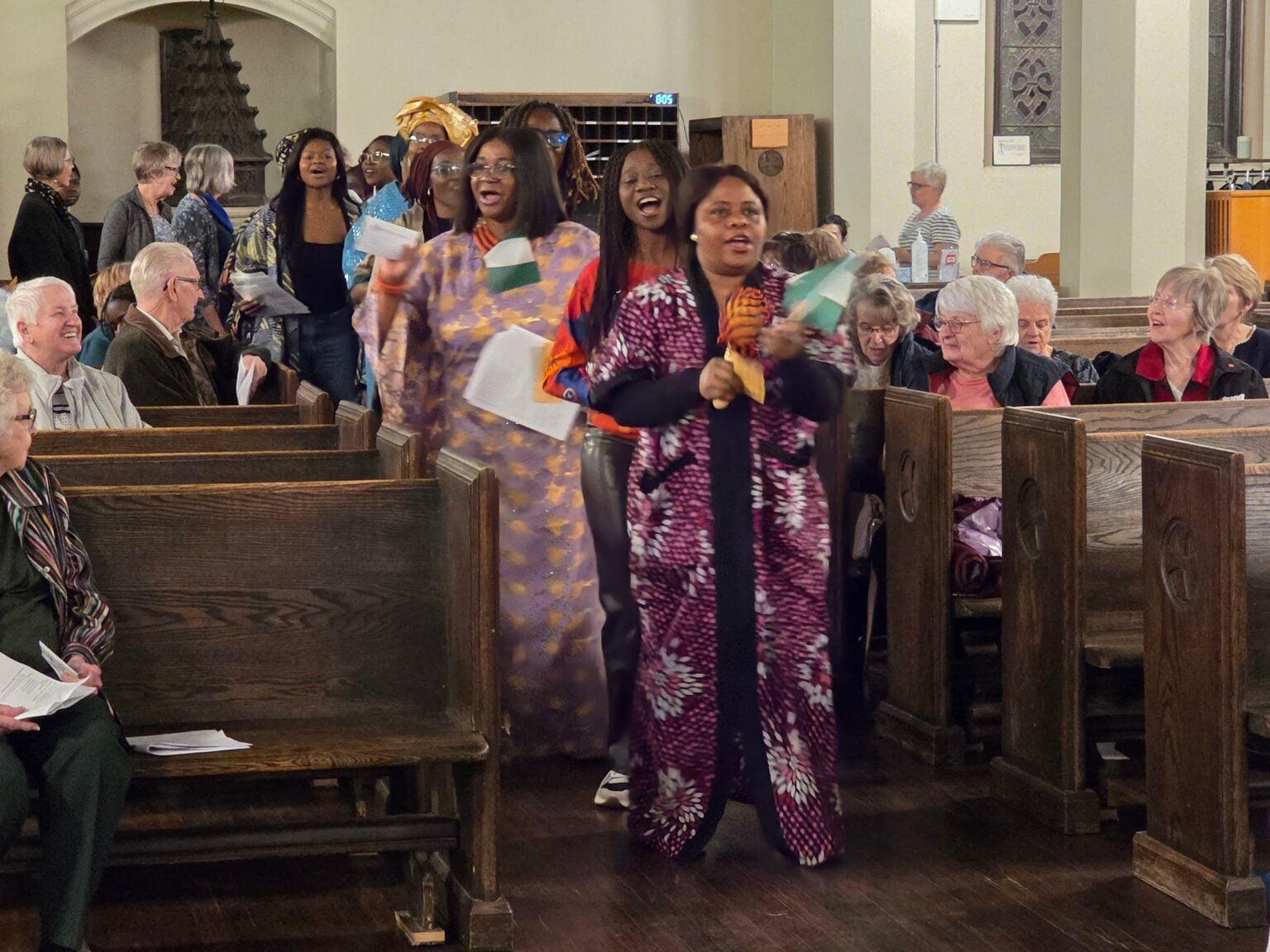
MOOSE JAW (Qu’A) — It’s not every day that dancing breaks out in an Anglican church, but a recent service saw people dancing up the aisle as they deposited their offertory donations at the altar.
More than 60 people attended the 99th annual World Day of Prayer event at St. Aidan Anglican Church in Moose Jaw on March 6, with the Nigerian community organizing the service using a script that women in the West African country wrote.
The service’s theme was “I will give you rest: come,” based on Jesus’ words in Matthew 11:28-30.
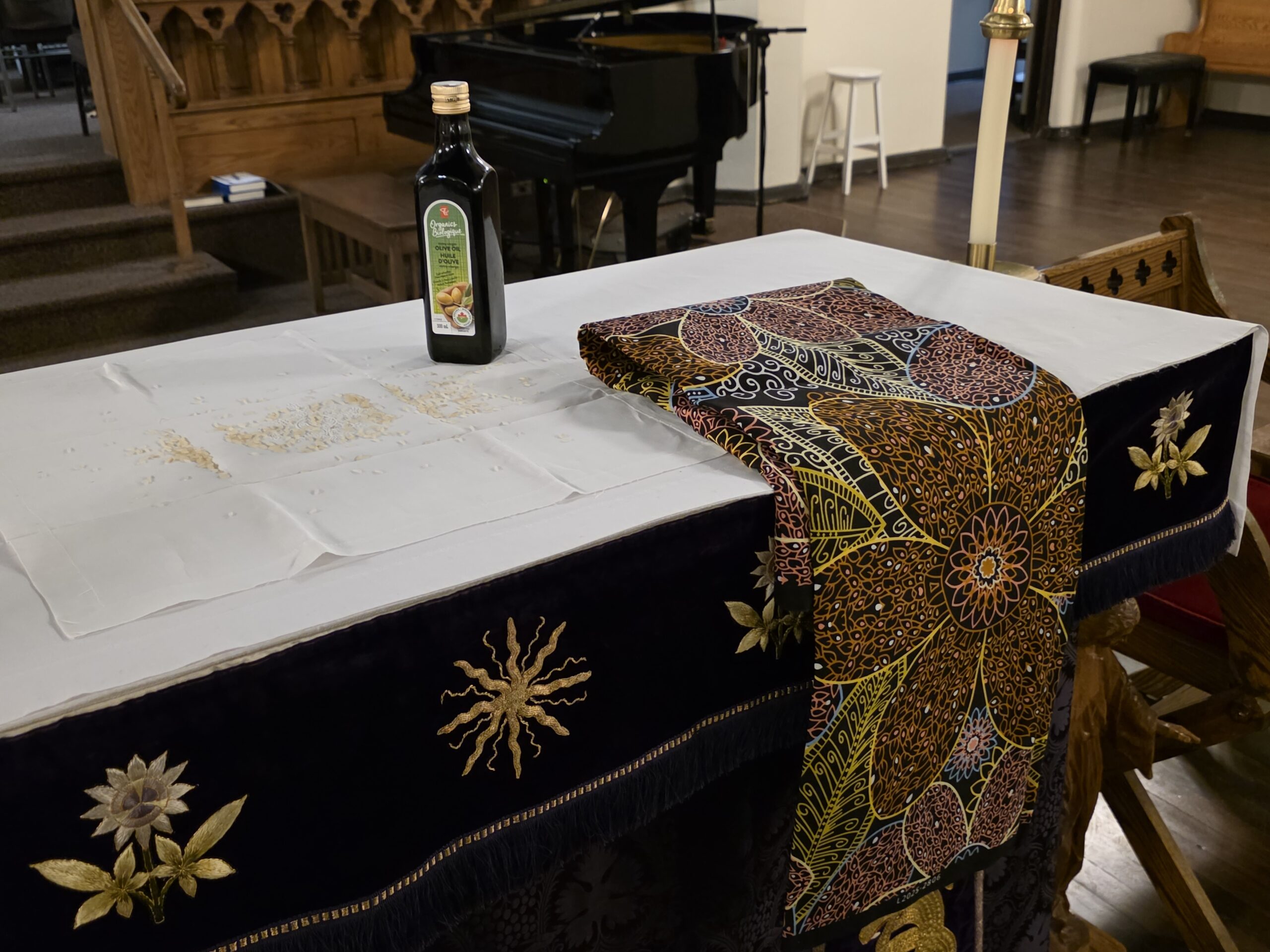
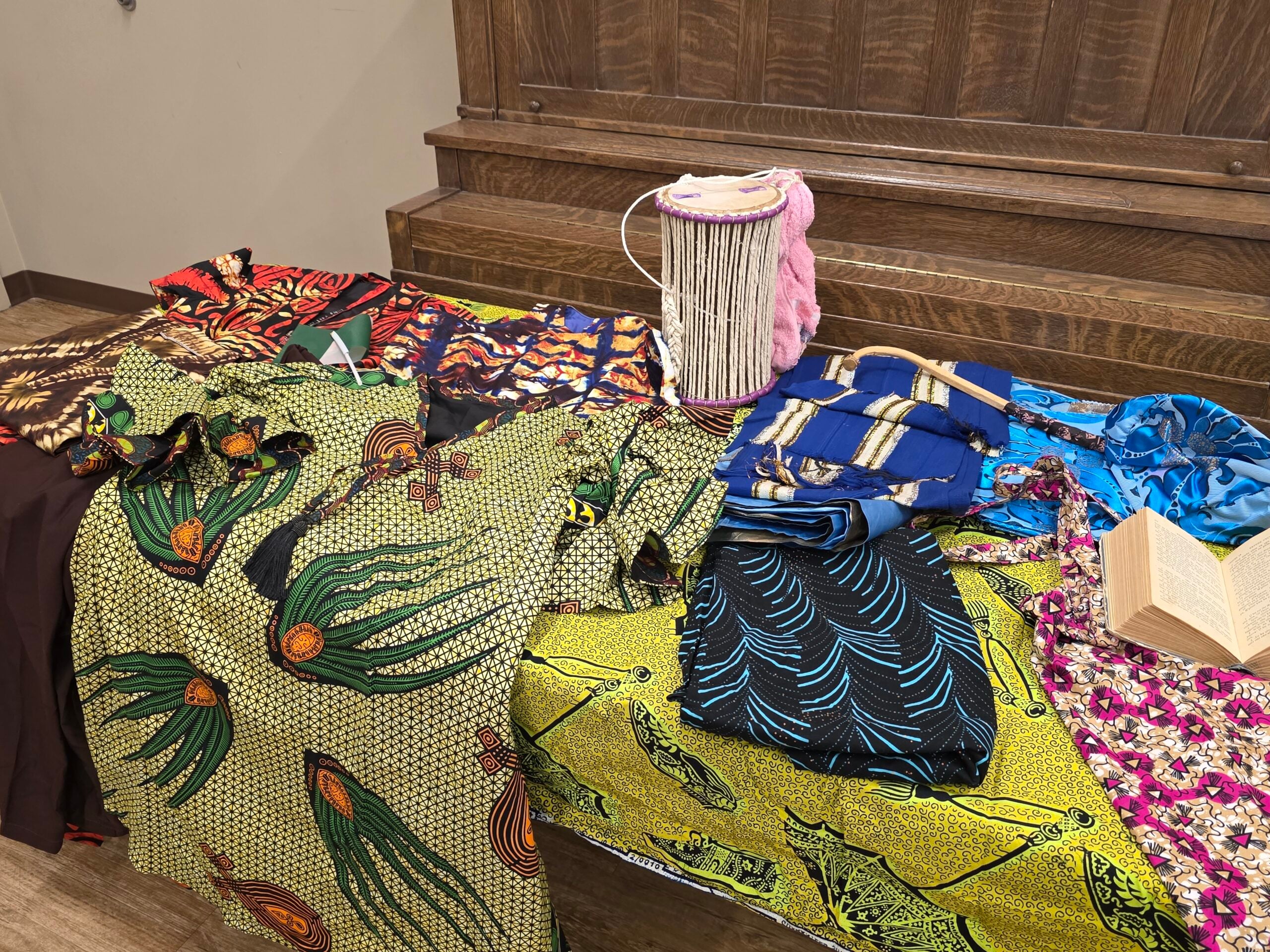
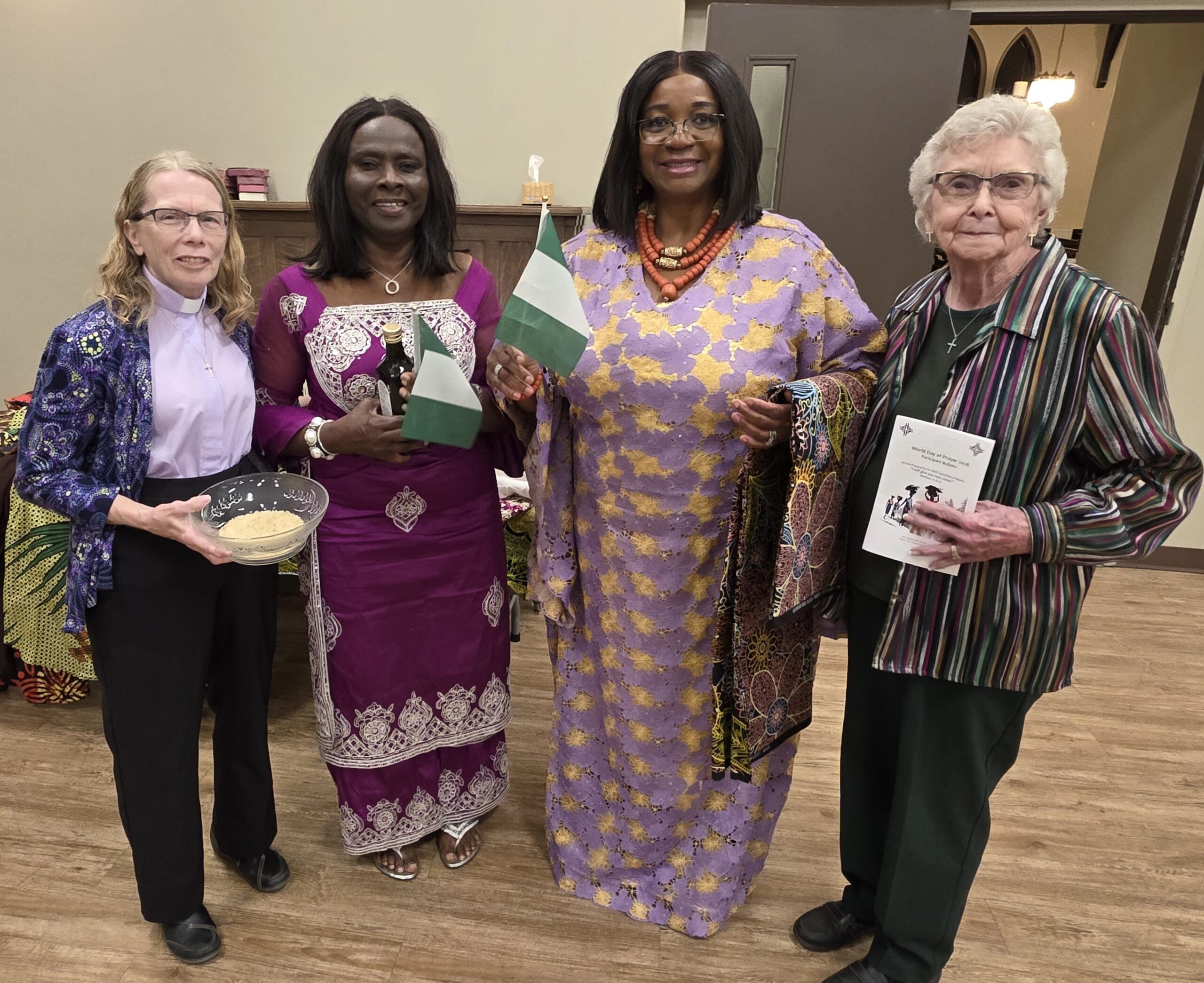
Some cultural items on display included vibrant textiles that embodied Nigeria’s rich tapestry of cultures, told a story of heritage and identity through patterns and colours, and represented the people’s resilience and creativity; rice that symbolized the interconnectedness of poverty and despair; and olive oil representing the country’s complex history with crude oil.
The hymns included “In Christ Alone,” “I Heard the Voice of Jesus Say,” “Great Is Thy Faithfulness” and “Jesus Loves Me.” There was also a praise song called “Keleya (Praise God),” which was partially sung in the Nigerian language of Igbo, and an offertory song called “This is the Day of Joy.”
The Women’s Inter-Church Council of Canada distributes World Day of Prayer materials across the country. Worldwide, more than 1.5 million Christians in 150 countries and speaking 90 languages gather in spirit and unite to pray for issues affecting women and children in the particular country.
Agwalonye Aghamelu and Ndidi Uzo, both of whom attend St. Aidan, were two of the four event organizers; Deacon Arleen Champion from St. Aidan and Bev Ruehs from Trinity United were the other co-leaders.
The two Nigerians said they were thrilled with how the service went and with the number of people who attended.
Aghamelu said she enjoyed the stories about several women and girls from Nigeria who have overcome the challenges in their lives. Furthermore, she enjoyed watching people sing and dance up the aisle as they delivered their donations to the altar.
Laughing, Aghamelu agreed that it’s not often one sees dancing in an Anglican church — especially during a service.
Uzo noted that the service was “very glorious,” while she was happy that the Nigerian community could showcase its cultural and religious practices to Canadians. Moreover, she was pleased that the event highlighted the struggles Nigerians are facing in their country.
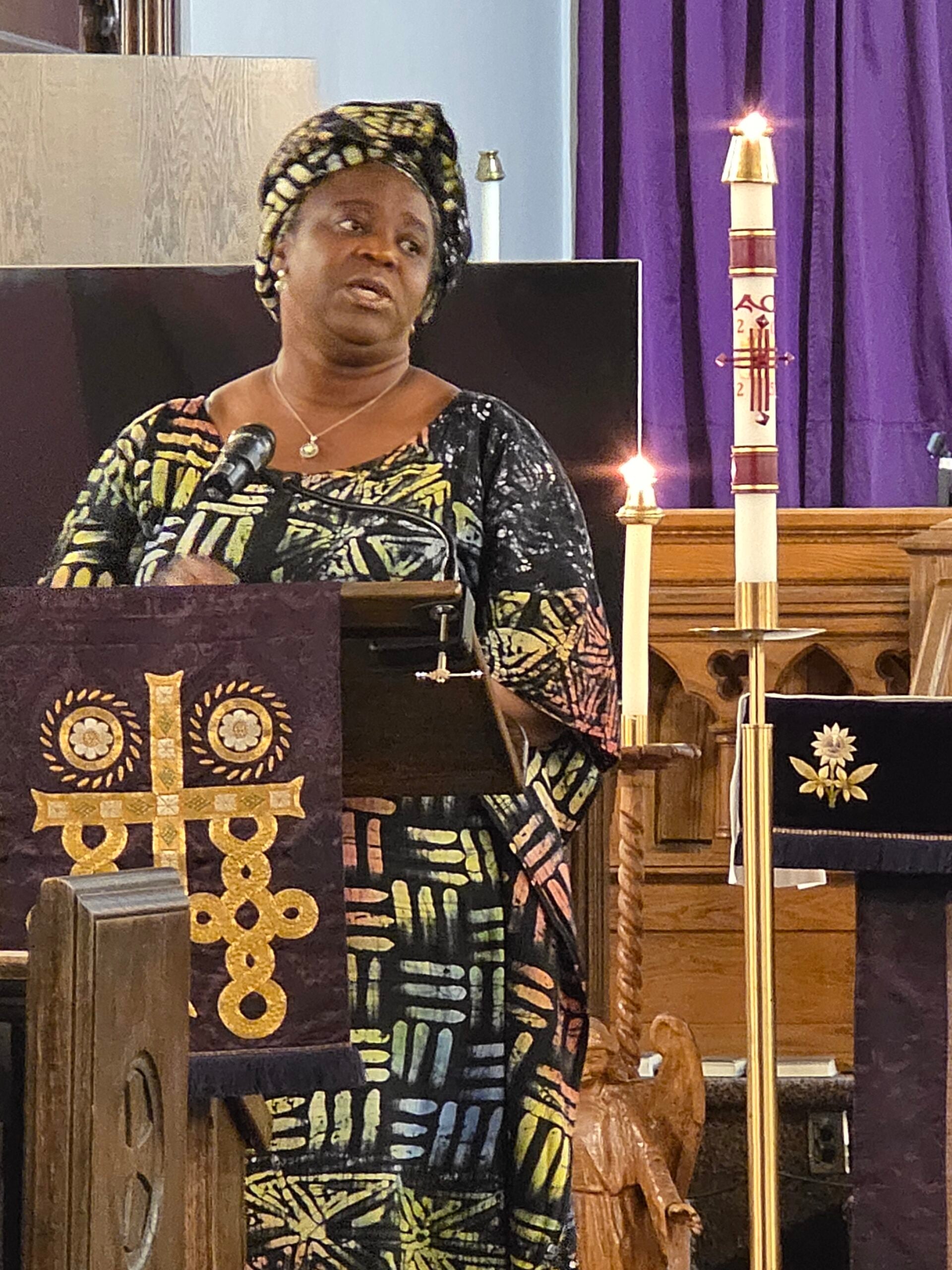
All of the Nigerian women who participated in the service wore colourful dresses with various patterns, which Uzo noted was part of their culture. Furthermore, she and Aghamelu said women wear such clothing when they attend church because of how important it is in their lives.
Meanwhile, Aghamelu said organizing the service wasn’t easy, especially since the leaders had to contact other churches to encourage them to participate.
“And they really, really complied (and) turned up,” she remarked. “To me, I thought it was a great success.”
Aghamelu admitted that she hadn’t expected the church to be so full. However, the fact that so many people attended indicated that many Canadians still pray.
“I was here last year, and I think this year, many more people came,” she said. “And many people testified that having Nigerians lead the service made it richer, (compared to) last year, (when) no one from the country (of the Cook Islands in the Pacific Ocean) came.
“But this year, mainly, Nigerians took (the) lead of the service, the prayers, the reading of the stories (and) the cooking … ,” Aghamelu added. “To God be the glory.”
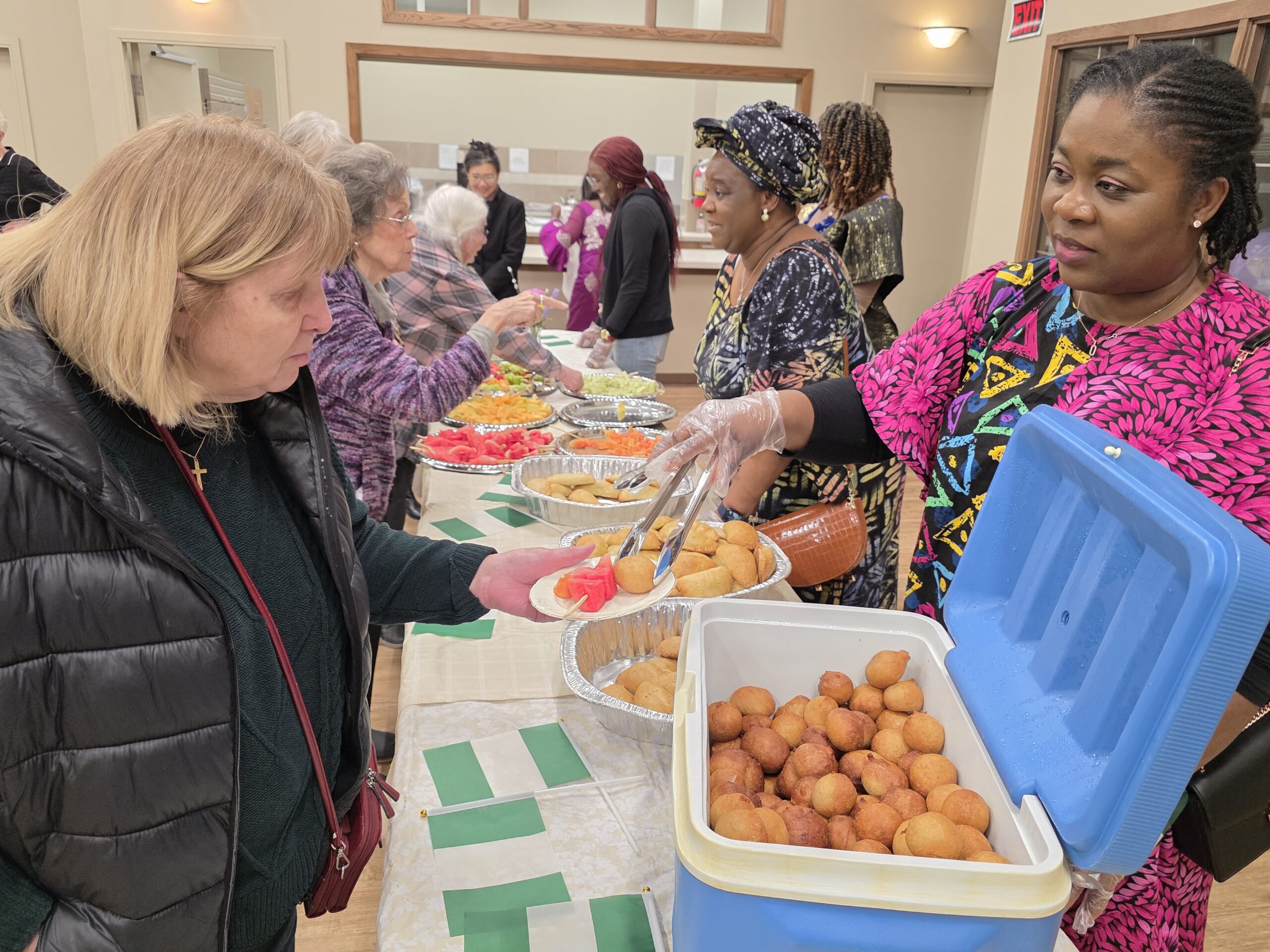
Uzo highlighted the food, which included puffs-puffs, a spongy, deep-fried doughnut-type ball; fruits; calzone-type meat pies with beef, carrots, onions and spices; and juice.
Aghamelu also noted that the large crowd showed Western support for the West African country, which is positive, since many Nigerians have given up on their country because the government doesn’t listen to them.
“And so, to us … when this (Nigerian-themed service) came, I was like, we’ve prayed (and) we’ve prayed, and it feels like our prayers were … being heard,” she said, adding that many Canadians today are talking more about Nigeria, which shows that they care.
For more information, click here.