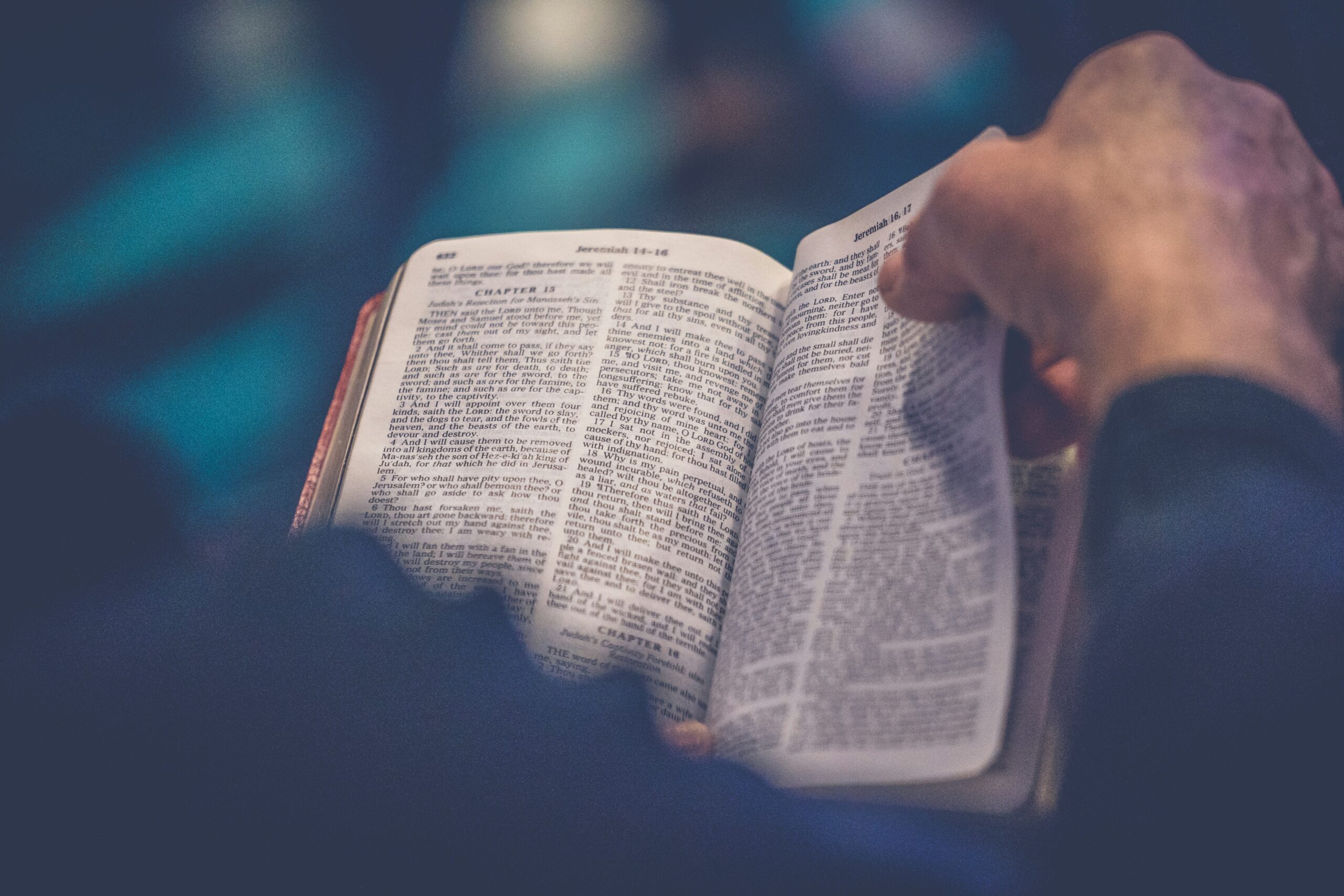
Do you ever wonder how you are connected to the generations before you? Curiosity about our connection to the past is one of the motivations people have for tracing their family trees.
Extensive genealogical search can reveal ancestors whose traits we admire and perhaps see mirrored in our own character. It can also show us people who lived in ways that seem very different or antithetical to our current values. Discovering we have an ancestor who owned slaves or employed child labourers can leave us wondering if we want to be connected to them.
For some people, reading the Old Testament (Hebrew Scriptures) can be a bit like discovering family to whom they are related but who look at the world differently. Are we even worshipping the same God?
Christians have struggled with this question from our earliest days. In the tension that developed between early Jewish followers of Jesus and those Jews who did not see Him as the Messiah, the debate about how to interpret the Law and the Prophets was quite intense.
Add to this, the incorporation of Gentile believers into the church. That raised the question of what, if any, Jewish laws needed to be followed by Gentile believers in Christ. The letters of Paul emphasize God’s grace through Jesus, and reject the need to follow Jewish law except in a few essential matters.
Debates in the first few centuries of the church deepened a polarization between Christians who held the teachings of the Hebrews Scriptures dear and those who saw them of little value. It came to a head in the teachings of Marcion. Marcion was a second century follower of Christ from modern day Turkey, who believed that God had sent Jesus to establish a gospel of Love to the absolute exclusion of the Law.
He saw the God of the Old Testament as a despotic, cruel and capricious Creator (whom he called the Demiurge) and believed that Jesus was sent by the Supreme God of Love to overthrow the Demiurge. Consequently he rejected the Hebrew Scriptures (Old Testament) completely and urged his followers to read only 10 of Paul’s letters (slightly modified) and a version of Luke’s gospel that he edited to support his views.
As you might imagine, Marcion’s teaching engendered a major discussion about what writings from both Jewish and Christian sources were to be considered truly representative of the revelation of God in Jesus Christ. What we know today as the New Testament is one of the outcomes of this debate.
Over time some early letters and gospels were rejected by the church councils. The teachings of some people, including Marcion, were also rejected. What emerged by the fourth century was the acceptance of what we now know as the Old and New Testaments as the authentic witness of God’s covenant with us.
Both are essential to our identity and our formation. Both are part of our sacred family tree.
The acceptance of both Testaments might not sit well with those who read the Old Testament with some puzzlement. How are we to interpret the stories of God’s interaction with the people of the covenant over thousands of years?
The Anglican reformers of the 16th century might give us a clue. Article VII of the 39 Articles affirms that “The Old Testament is not contrary to the New: for both in the Old and New Testament everlasting life is offered to Mankind by Christ.”
Like Martin Luther, they saw what they knew of Christ in the Old Testament. In Christ they found forgiveness, freedom, healing, hope and guidance on how to live.
When they read the Old Testament they saw that as well. God’s anger when the people worship the golden calf Aaron created for them is passionately real. So too is God’s letting go of that anger, forgiving them and giving them another opportunity to follow in God’s Way.
The Ten Commandments are God’s guidance on how to live as free people who are asked to respect and care for one another. The prophets warn of how we go astray and remind us how to live as God’s people.
The prophet Ezekiel gives us a picture of what that means in daily life when he describes a righteous life as one in which a person gives bread to the hungry and clothing to the naked, executes justice and seeks reconciliation, and does not use his power to exploit, oppress or rob another (Ezek. 18: 5-9). We can see the life of Jesus in the words of prophets like Ezekiel. We can see their promise of God’s Messiah revealed in him.
When we read Scripture we do so with both our mind and our heart. There are times when we don’t understand what is being said or why it is being said that way. Study involves looking at the context of what is said, what we know of the historical period and how what we are reading is consistent with our overall understanding of God.
It also involves prayer and asking God to open the Scriptures to us. We are always interpreting what we read in light of what we know and where we are with God. Reading the Old Testament and knowing that the Law and the Prophets shaped Jesus and were fundamental to His teaching and His action can help us see the Hebrew Scriptures through His eyes.
Doing so prayerfully can help us see the many ways Holy Scripture contains all things necessary to salvation — even when it leaves us realizing we still have some questions about how it all fits together! Like our ancestry, sometimes we are connected in ways we don’t fully understand.
Canon Cheryl Toth is a retired priest in the Diocese of Qu’Appelle and an honorary assistant at its Cathedral.