Suggestion: This piece is intended as a conversation starter in your context. If you have a viewpoint on this subject that you would like to share or begin a conversation, please send a note to the associate editor, Rev. Peter Coolen, at [email protected] and your comments could be included in a future issue of the paper.
God is intimately engaged with us in the daily grind of living. In Jesus, God has stooped down to enter our reality of love and hate, of pain and joy, of sorrow and happiness, of despair and hope, of life and death. What an unfathomable and lavish generosity of the Almighty.
On Sunday, the tables are flipped. On Sunday it is God who invites us into His heavenly dwelling place through worship and praise, through mercy and instruction, and in feeding us at the heavenly banquet called the Holy Eucharist/Communion.
The heavenly and sacred spirit of Sunday worship is expressed in many and varied ways, in order to engage all our senses. We gather in a special place called a church or other designated holy place. We sing hymns to our God, letting our spirits soar on the melody and through joining our voices.
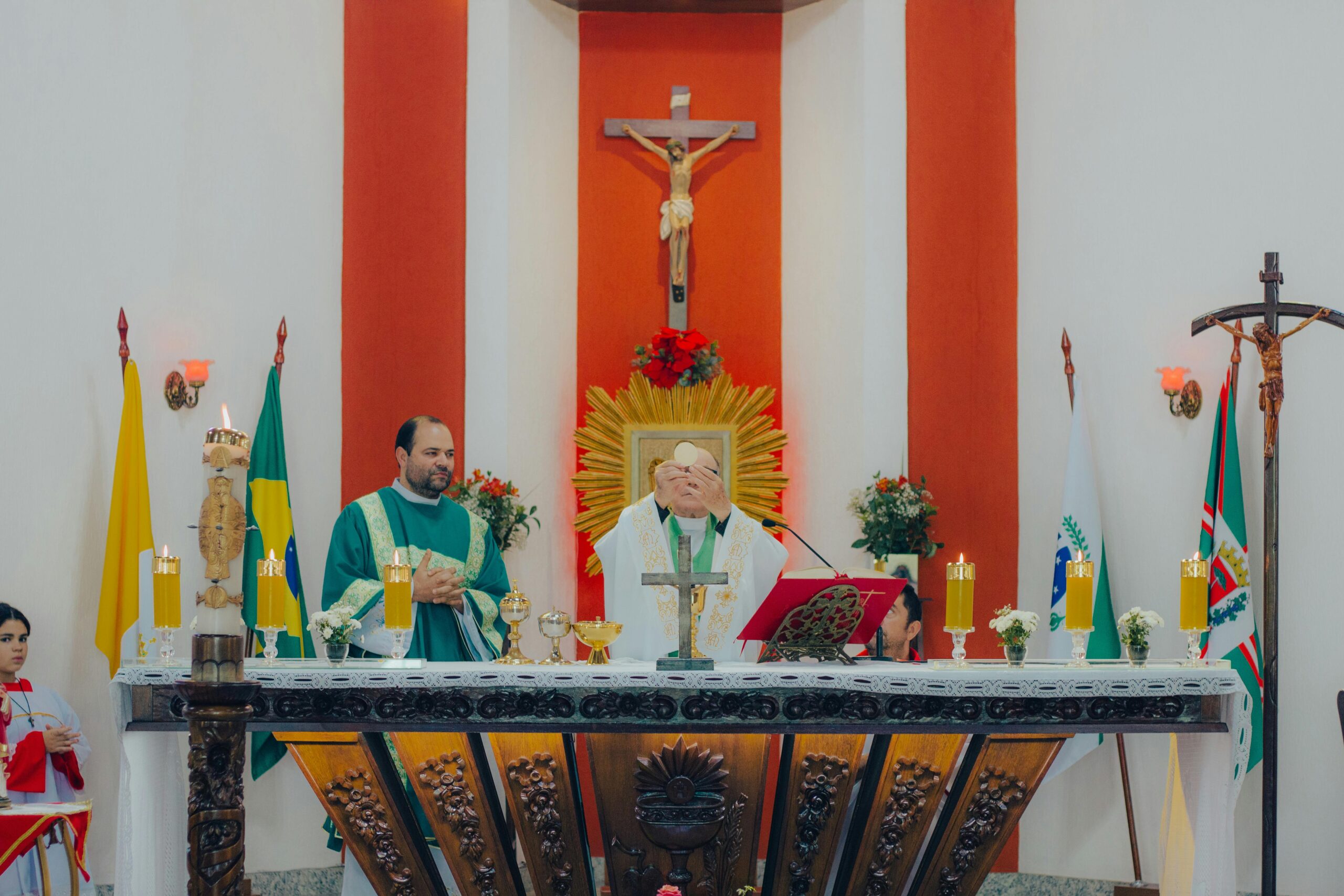
The celebrant/worship leader wears special attire, a reminder that we are entering a holy space where God dwells with us, a holy people. The Anglican tradition will see the priest communicate reverence, care and respect in recognizable gestures and body language; think of the orans position. His/her entire being is focused on the holiness, mercy and generosity of God among us.
The architecture of the church reflects the symbolic meaning of each liturgical part: the lectern to proclaim the Scriptures, the altar rail to kneel for Holy Communion, the pulpit to listen to the Holy Word as applied today, the altar for the sacred meal, the pews for the people of God. Each spatial item is intended for a distinct part of worship while serving a common purpose: to raise our praise and thanks to our God, to pray for the world, to listen to the ancient words in the Holy Book, to instruct us in holy living and to seek mercy, to be fed holy food at Christ’s holy table.
Ultimately all aspects of the liturgy serve to raise our spirits into a foretaste of the heavenly realms where all are fed and loved, forgiven and comforted.
Now it wasn’t always like this of course. Church buildings and today’s ritualized clothing, gestures and movements seem far removed from the home-based practices of the early church in the breaking of the bread. It was only over time that God’s people grew the desire to clothe the sacred meal with honour and care, beauty and creative expression, in the best way they knew how.
It is thus that daily ancient Roman dress codes turned into ceremonial attire for the Holy Mass that continues to characterize the celebration of the Holy Eucharist/ Communion today in several liturgical traditions. The one constant remains throughout time and place: six days per week, God stoops down into our daily grind in and through Jesus, the Word made flesh.
Every Sunday, the day of the resurrection, God draws us into the heavenly sanctuary to feast on love, grace and mercy. I for one find this understanding deeply inspiring and comforting, and rich in meaning and purpose.
So, what if each designated space and liturgical act are changed and/or altered away from this intended purpose and meaning? While the Anglican Church does not officially mandate the wearing of vestments, it is understood that Anglican worship leaders will wear vestments in a church setting to symbolize order, office, and role or function, and as a way to draw attention away from themselves and more on the action of worship.
So what happens when the celebrant does not don liturgical garb, when aspects of presiding happen from a place in the sanctuary not designed for that, when body language is reduced to accidentals and casual gestures? I’m not referring to worship services in informal, home-style, outdoor settings, or in non-liturgical denominations but primarily to services in church buildings in largely liturgical traditions such as Anglican and otherwise.
The argument used to justify casual worship in formal church spaces tends to be to make worship feel closer to the people, and because today’s secular culture is unfamiliar with our liturgical formality. I have attended such worship services from the pew, some in other church traditions.
The shifts and changes can make for a markedly different experience. The worship leader can become more visibly distracted while neglecting appropriate body language. Leading parts of worship from spaces in the sanctuary not designed for those particular aspects can cause dissonance and distraction in the congregation. Taken together such shifts could result in a diminished reverence and poise, unless the worship leader is very self-aware and skilled to remain focused and reverent.
One can thus be left with the unsettling feeling that the sacred nature of this human-divine encounter was compromised by careless misappropriation.
I am likely too much of a traditionalist. But I’d like to know if I’m the exception, or do others share the sentiments? Does the theological and spiritual meaning change by certain shifts in formality? Could this have ecumenical implications? Some denominations would welcome a reduced formality, others would abhor it.
What are we gaining by informality in formal worship settings and what are we losing? In our shallow, distraction-driven culture, how do we draw people into a life-giving encounter with the Holy One in the crib and on the cross through worship that is both creative and faithful, inspiring and harmonious? Am I simply too rigid to change and adapt, too “high” Anglican for my own good? Or are these legitimate concerns that require attention? Feedback and comments welcome.
Another article focusing on related matters:
https://anglicanjournal.com/anglicans-aliens-priests-ponder-wearing-vestments/
The Rev. Canon Marie Louise Ternier is the Diocesan Ecumenical Officer for the Diocese of Saskatoon.