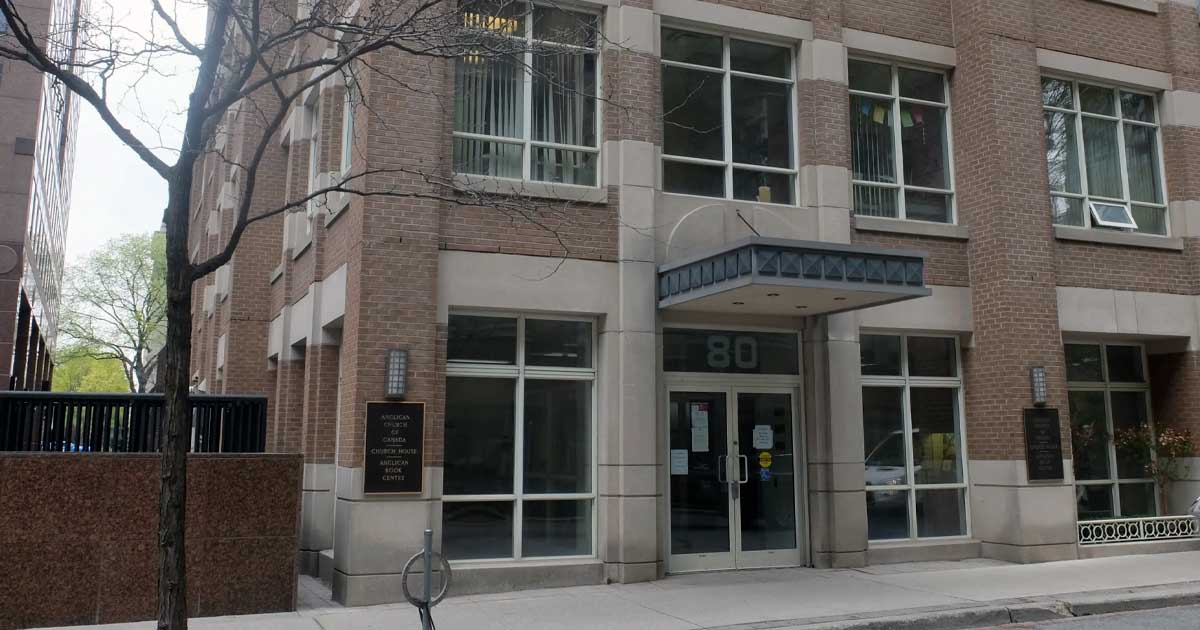
PRINCE ALBERT — The Anglican Church of Canada is at the point where we need to reduce expenses in a dramatic way. There is less money from parishes to maintain the $10,396,499 budget.
Rather than arbitrary budget cuts, a Primate’s Commission was struck to gauge priorities and to listen to groups within the church. The nine members of the commission were invited by the Right Rev. Linda Nicholls, former primate, to discern what actions the Anglican Church of Canada could take to reform its structures, such as Church House and General Synod, and stay true to the gospel.
The scope is ambitious and hopeful as the commission is open to “radical transformation.”
In August, the Primate’s Commission released three reports including: a history of General Synod, an introduction to the commission, and an introduction to the seven hypotheses. These reports and hypotheses reflect 10 months of online meetings and one in person meeting.
As one member put it, “There were many compromises.” The name of the commission, we learn, is Reimagining the Church – Proclaiming the Gospel in the 21st Century.
To be sure, at this state the commission only offers hypotheses, or thought experiments. All Anglicans are meant to consider, ponder, and perhaps even offer alternative points of view.
The commission isn’t saying what must happen, rather, these are things we must think about as we downsize our structures. Indeed, any decision on the future of the church is made by General Synod, not the commission.
It is clear much work was done hearing different points of view, yet it may suffer from the same drawbacks as previous efforts to change the church. For example, it reflects the voices of those closer to Church House.
As in the past, any conclusions or insights may not permeate to the local church. Since the release of the first reports there have been news articles in The Living Church and The Anglican Journal on initial reactions. The commission attempts to pre-empt disagreement by saying the seven hypotheses are intentionally provocative.
As it happens, the news articles feature bishops who believe Church House is marginalizing either Indigenous Anglicans or northern dioceses. The news articles do not interview churches or priests at the local level. Another indication that, so far, the controversy rests with those close to General Synod or with official positions.
These news articles also reveal the underlying theme of subsidiarism. This refers to who has the authority to make a decision. For example, in the context of Canada, who gets to decide whether you can build a chicken coop in your backyard? The national government, the provincial government, the city, or the local neighbourbood? A local level should make this decision, however, which local level?
Similarly, our church, as the news articles make apparent, has difficulty over jurisdiction and authority. Even as the mandate of the Primate’s Commission is to look at matters within their jurisdiction, some believe the seven hypotheses extends the authority of Church House into their jurisdiction.
With the release of the reports and hypotheses, the commission intends to seek feedback. The commission plans to make recommendations to General Synod 2025. It is possible their work will contribute to motions at this same synod.
Readers of The Anglican Journal or the Saskatchewan Anglican can review the seven hypotheses and respond at www.anglican.ca/primate/tfc/reimagining-the-church.
The best way to give feedback is written correspondence to Monique Stone, Chair of the Primate’s Commission, 80 Hayden Street, Toronto, Ontario, M4Y 3G2.