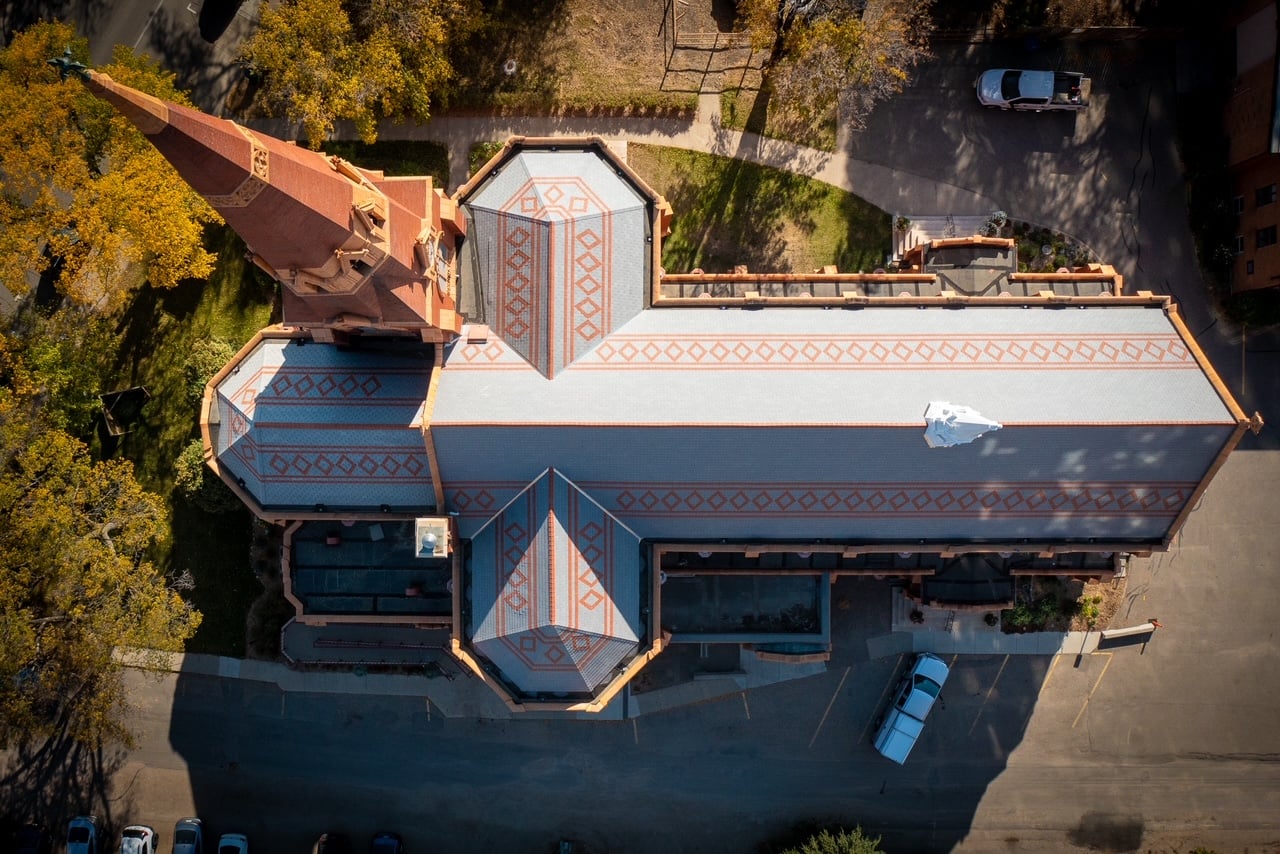
SASKATOON — Like many older buildings, St. John’s Cathedral in Saskatoon was accumulating a list of maintenance problems — and some were very significant.
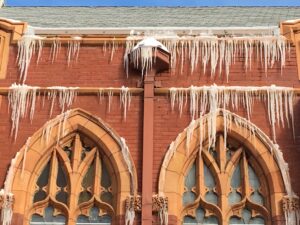
The roof was leaking, the gutters had failed and water from the roof was leaking in and pouring down the sides of the building, causing damage to terracotta and brick. Furthermore, the glass protecting the stained-glass windows was not sufficient, shingles were falling off the roof, and bricks were crumbling. There was an urgent and critical need for restoration work on the beautiful, historic building.
Bert Munro and the property committee saw this as an opportunity to improve the energy efficiency of the building. For example, roof and rain gutter repairs created an excellent opportunity to add roof insulation. At the same time, the Anglican Church of Canada “called on the church to take action on climate change, calling stewardship of the earth and the care of creation ‘a core responsibility of our faith.’”
Many years of planning, fundraising, and construction have since been done. An energy audit by the Saskatchewan Environmental Society helped Munro and the property committee identify energy retrofit opportunities. The roof has been insulated, a timed flush urinal has been replaced with manual flush, leaks have been repaired, the Columbarium air handling system was upgraded, and much of the lighting has been upgraded to LED.
As well as the cathedral, the parish hall, a building next to the cathedral where some windows had fallen from their frames, has received some energy love. This includes windows that have been upgraded, thermostats that have been programmed to fit the scheduled use of the space, two furnaces that have been replaced, and they have started taking advantage of passive solar energy by opening the shutters on the south windows during the day and closing them at night.
The congregation at St. John’s have been rewarded for their efforts. Besides addressing significant safety and occupancy issues and getting a building that will stand for many years to come, they have cut their natural gas use by 36 per cent and their water use by 47 per cent.
Munro says, “We’ve increased the usefulness of the space. On cold winter days, parishioners take their coats off in church, and even stay to visit with each other after services.”
And they are still going. Along with more functional and aesthetic renovations, Munro and the planning committee plan to do other energy efficient upgrades such as upgrading additional lighting, adding ceiling fans, upgrading the boiler control system, and adding additional glass to the stained-glass window openings.
For more information on how your business or non-profit organization can save energy and water, contact SES Energy Conservation engineer Angie Bugg at [email protected] or call 306-665-1915.