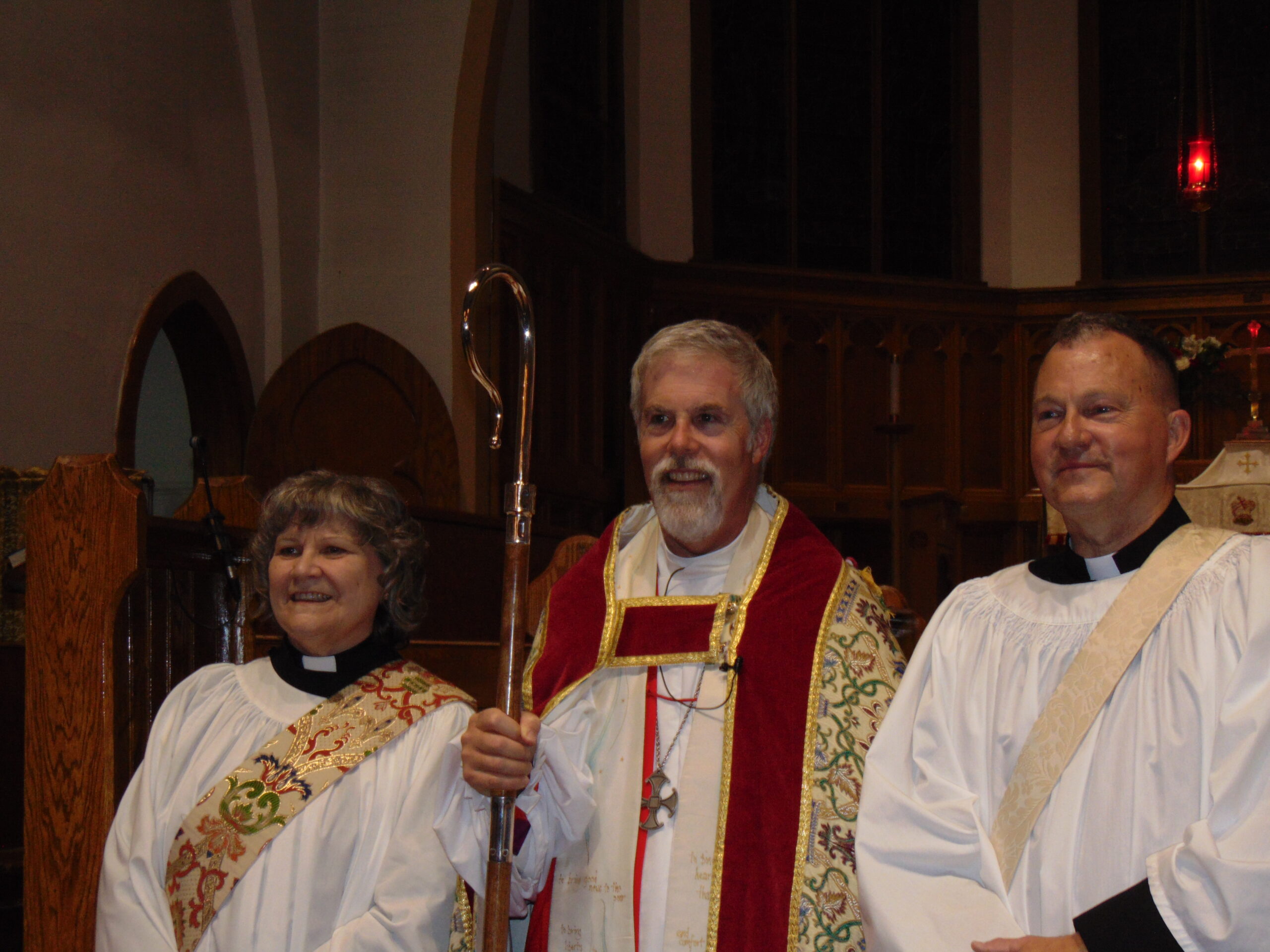
PRINCE ALBERT — This was a very special ordination in our diocese recently, and one reason was that it was Bishop Rick’s first time doing an ordination, and second, the two people ordained as deacons, David Zulkoskey and Arlene Sturgeon, will be vocational deacons.
The Rev. Elizabeth Short began her homily congratulating David and Arlene on what is a profound moment for them. Deacons aren’t merely appointed, their ordination is the culmination of what is usually years of soul searching, prayer, study and discernment.
The reading for Nov. 1 on All Saints Day — “for the lamb at the centre of the throne will be their shepherd, and he will guide them to springs of the water of life” Revelation 7:17 — reminds us of our baptism. It is through the waters of baptism that our life in Christ is created and has its being, we receive our identity and all other ministry springs from it. It is not only initiation into the church, but the first call to ministry.
Rev. Short has been a vocational deacon for eight years in the Diocese of Calgary where there are 20 deacons. A vocational deacon is someone who does not plan on being ordained a priest. The Greek word, Diokonia, from which the word deacon comes, means humble servant.
During a Eucharist, the deacon demonstrates this servitude by setting the altar and performing the ablutions, or cleaning up, afterwards. He or she stands on the priest’s right hand, ready to assist. It is why the stole is worn sideways — out of the way. The deacon is also given the responsibility of bringing the church to the world and bringing the needs of the world to the church.
To understand where the roots of the diaconate lie, we look at the phrase that states “he/she (the deacon) will seek for the sick, poor and impotent people of the parish, to intimate their estates, names and places where they dwell, unto the curate, that by his exhortation they may be relieved with the alms of the parishioners or others.” This is built on Acts, where we hear of the Twelve Apostles calling the many disciples to them and appointing seven to undertake service in the world, so the apostles may be freed up for their ministry in the word of God.
Having a deacon in your congregation means having someone who, by example, can help point you in the way of humble service to answer the call we all received in our baptism.
There are two definitions on the Anglican Church of Canada website of what a deacon is: “Deacons are symbols of Christ and his church, filled with grace and power through ordination” and “Deacons are agents of the Church in word, action and attendance who lead the people of God in carrying the light of Christ into places of Darkness.”
Short went on to say what a deacon is not. They are not glorified lay readers or wardens, a second-class priest of some kind of church administrator or officer. They are not there to run things or to keep everything together singlehandedly. The order of deacon is a full and equal order, not merely a stepping stone to priesthood. Vocational deacons are deacons for the rest of their lives.
The Rev. Deacon Elizabeth Short recalled her memories from her school years beginning in Grade 2 to graduating from Grade 12. Her many visits home and fond remembrances of her life in the church family at St. Alban’s. David is her brother-in-law who is married to her sister Margaret, her father was bishop of the diocese for many years and her mother Frances was an integral part of the operation of the cathedral.
Deacon Arlene Sturgeon will serve with the Rev. Michael Lyons, in St. John’s Church in Nipawin and Deacon David Zulkoskey will serve with the Rev. Canon Dr. David Butorac in the Cathedral Church of St. Alban the Martyr.